Why the Vendors Winning in the MSP Channel Are Obsessed With Time-to-Value, Not Feature Count
Feature count is how vendors compete on paper. Time-to-value is how they compete in the market.
There is a pattern in how channel vendors present themselves to the MSP market. Feature lists. Integration counts. Platform certifications. Comparison tables that show the vendor winning in every category against unnamed competitors. This is how vendors compete on paper.
The MSPs evaluating those vendors are asking a different question. Not "which product has the most features?" but "how quickly will this product make a difference in how we operate?" The gap between those two questions is where most channel vendor go-to-market strategies lose the deal they thought they were winning.
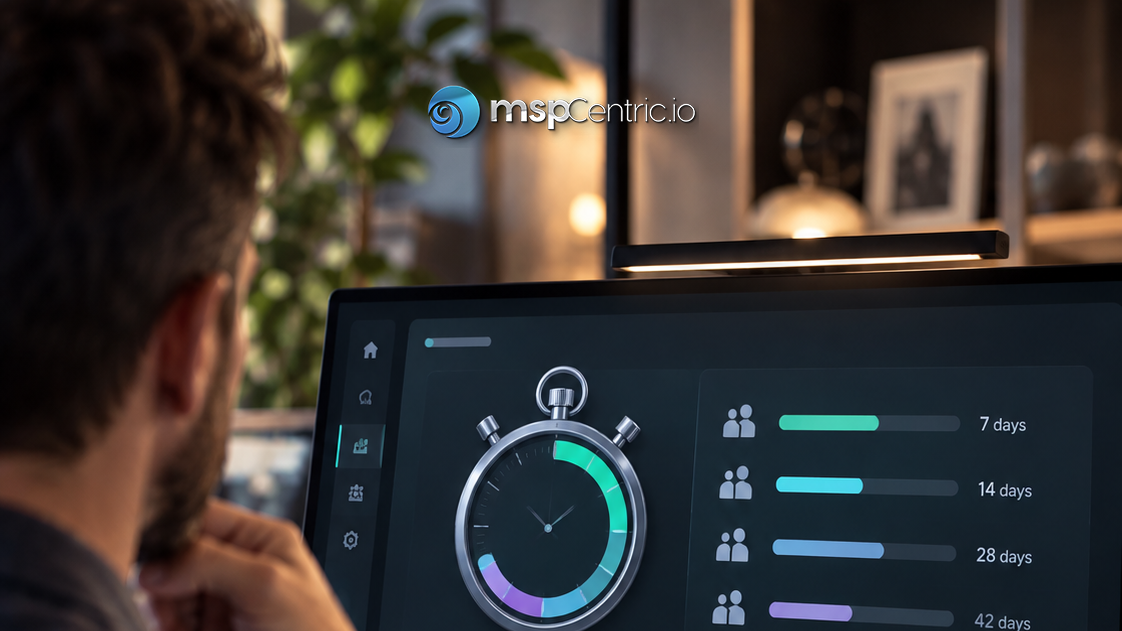
Time-to-value is the interval between an MSP enabling a product and experiencing a concrete operational benefit. It is the first ticket that routes correctly because of the integration. The first billing cycle that closes faster because the reconciliation is automated. The first client report that generates in minutes rather than hours. The specific, felt moment when the MSP's operations are measurably better because of the vendor's product.
This moment determines everything about how the MSP relationship develops. An MSP who reaches the first-value milestone within the first 30 days becomes a user. An MSP who does not reach it within 60 days becomes a churned customer who leaves a negative impression in the peer communities that every other MSP in the vendor's target market participates in.
Why Does Feature Count Miss What MSPs Actually Care About?
Because features are potential value. Time-to-value is realized value. An MSP evaluating a vendor's feature list is evaluating what the product could do for their operations. An MSP who has experienced the first-value milestone knows what the product has already done. The second is categorically more persuasive than the first, and it compounds through peer referrals in ways that feature lists never do.
The vendors who win in the MSP channel consistently are almost never the ones with the longest feature list. They are the ones whose products reach the first-value milestone fastest, most reliably, and in the widest range of MSP environments. A product that has three fewer features than the market leader but delivers its core value within 48 hours of enablement will win more renewals and generate more referrals than one with ten more features and a 90-day onboarding process.
What Does Time-to-Value Optimization Look Like in Practice?
It starts with defining the first-value milestone explicitly. What is the specific operational outcome that an MSP experiences when the product is working as intended? Not a configuration milestone like "integration enabled" or a usage milestone like "first API call." An operational milestone: the first billing discrepancy surfaced, the first ticket automatically routed, the first client report generated without manual intervention.
Most vendors have not defined this milestone explicitly. They track product usage metrics — logins, API calls, feature activations — that correlate with value delivery but do not measure it. The vendors who are obsessed with time-to-value track the milestone itself, measure the interval between enablement and first achievement across different MSP cohorts, and treat a long average interval as the highest-priority product problem to solve.
The second component is removing the friction between enablement and the first-value milestone. Configuration complexity, documentation gaps, PSA environment incompatibilities, and support ticket volume in the first 30 days are all indicators that the path to first value is longer than it needs to be. Each friction point is an opportunity to shorten the interval.
PSA integration quality is often the most significant friction point. An MSP who enables a product that integrates with their PSA expects the integration to work in their specific PSA configuration, not in a reference configuration the vendor tested against. When the integration does not work correctly in the MSP's actual environment, the time-to-value interval extends until the configuration issue is resolved. Vendors who partner with MSPCentric to build and maintain their PSA integrations are removing one of the most common sources of first-value friction — because integrations built with genuine PSA environment expertise work correctly in production environments, not just in reference configurations.
FAQ
Why does feature count underperform as a competitive metric in the MSP channel?
Because features represent potential value, not realized value. MSPs who have experienced the first-value milestone know what the product has already done for their operations. MSPs evaluating a feature list are estimating what the product might do. The second is categorically more persuasive, and it compounds through peer referrals in ways that feature lists never can.
What is the first-value milestone and why does it matter?
The first-value milestone is the specific operational outcome an MSP experiences when the product is working as intended — the first billing discrepancy surfaced, the first ticket automatically routed, the first report generated without manual work. It is the moment the MSP's operations are measurably better because of the product. Vendors who define, track, and minimize the interval to this milestone win more renewals and generate more referrals.
What are the most common sources of friction that extend the time-to-value interval?
Configuration complexity, documentation gaps, PSA environment incompatibilities, and support volume in the first 30 days. PSA integration quality is often the most significant: when an integration does not work correctly in the MSP's actual PSA environment, the time-to-value interval extends until the issue is resolved.
Subscribe to our newsletter today
Stay tuned for all things MSPCentric and PSA integrations.