"We'll Build It Internally" — How Vendors Lose PSA Integration Deals Before They Start
The "we'll build it internally" objection kills more PSA integration deals than any competitor. Here is what it actually signals and how to respond.
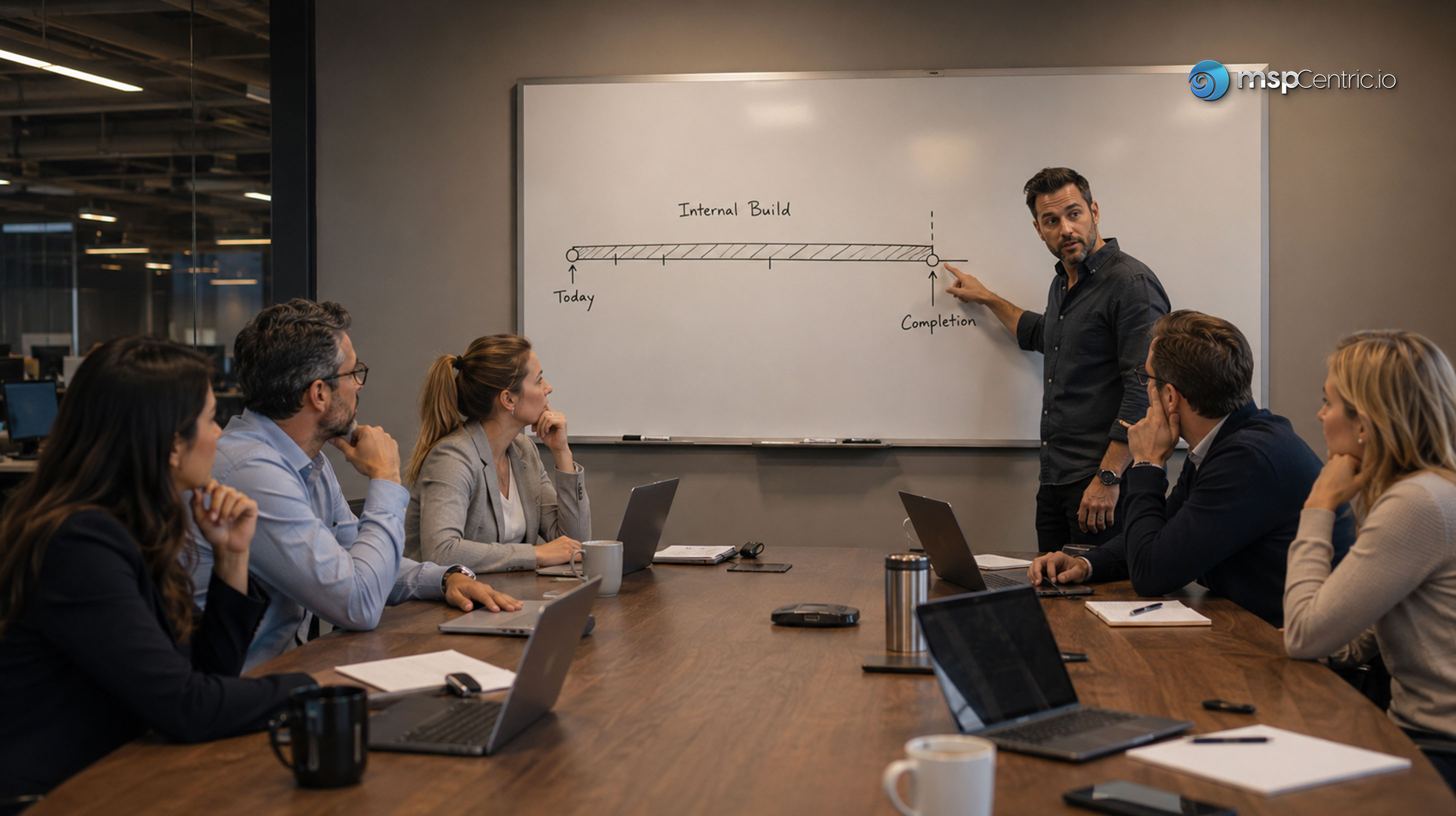
There is a version of the channel vendor sales conversation that ends before it ever really begins. The vendor has explained the value of a PSA integration. The prospect has listened. And then the product leader or CTO says: "Thanks for this. We have been planning to build it internally."
The meeting ends politely. The vendor follows up. The prospect goes quiet. And six months later, the integration still does not exist, the deal never happened, and nobody quite understood why.
This objection is the most misunderstood in channel vendor sales. It looks like a competitive loss. It is almost never a competitive loss. It is a prioritization loss, a risk perception loss, or a cost-of-ownership loss. And it requires a completely different response than a feature comparison.
What Does "We'll Build It Internally" Actually Mean?
It rarely means what it says. In most cases, a prospect who says they will build the integration internally has not made a committed decision to do so. They have expressed a preference for control, a concern about dependency, or a vague sense that internal resources are available to handle it.
The statement is a signal, not a conclusion. It signals that the prospect has not yet understood the full cost of building and maintaining a PSA integration over time, has not been given a clear reason why a partner would be more reliable than internal engineering, or has not had the conversation framed around their core product rather than the integration itself.
Each of these signals requires a different response. Treating them all as a single objection to overcome with a lower price or a feature list is why the objection kills so many deals.
What Is the Actual Cost of Building Internally?
The upfront build cost is the number most prospects have in mind when they say they will build internally. It is also the least important number.
The real cost of an internal PSA integration is the ongoing cost: monitoring PSA release cycles, updating the integration when PSA APIs change, handling edge cases that only surface in real MSP environments, maintaining documentation, supporting the integration through the vendor's own support team, and managing the compounding complexity as the integration surface area grows over time.
For a vendor whose core product is not PSA integration, this ongoing cost is a permanent operational commitment that grows with every PSA platform the vendor supports. The first integration is a project. The second is a program. The third is a department.
Most prospects who say they will build internally have modeled the project, not the program. The most effective response to this objection is not to argue about the build cost. It is to make the ongoing cost visible in a way the prospect has not calculated yet.
How Should Vendors Respond to This Objection?
Not with a feature comparison. Not with a price concession. With a set of honest questions that surface the ongoing cost the prospect has not yet modeled.
"What's your plan for staying current when ConnectWise pushes an API update that changes how agreements sync?" is a more effective question than any capability slide. "Who owns the integration when your engineering team is focused on the next product release?" surfaces the prioritization reality without being adversarial.
The goal is not to make the prospect feel wrong about considering an internal build. It is to move the conversation from project cost to total cost of ownership, and to position external integration expertise as a strategic choice rather than a vendor relationship.
Vendors who consistently win against the internal build objection are the ones who have internalized that they are not selling a feature. They are selling the elimination of a permanent operational obligation that their product team should not own.
FAQ
Why do most vendors lose to the "we'll build it internally" objection?
Because they treat it as a feature or price objection and respond with comparisons or concessions. In practice, the objection almost always signals a misunderstanding of ongoing maintenance cost, not a committed decision to build.
What is the real cost of building a PSA integration internally?
The ongoing cost: monitoring PSA release cycles, updating integrations when APIs change, handling production edge cases, maintaining documentation, and supporting the integration through the vendor's own team. This cost compounds with every PSA platform supported and grows permanently over time.
How should vendors frame the internal build conversation?
Around total cost of ownership, not upfront build cost. Questions that surface the ongoing maintenance reality, "who owns this when your engineering team is focused on your core product?" are more effective than any capability comparison.
Subscribe to our newsletter today
Stay tuned for all things MSPCentric and PSA integrations.