Intro
At some point, every MSP vendor hears the same question:
“Do you integrate with our PSA?”
At first, the answer is simple.
You integrate with one — maybe Autotask, maybe ConnectWise.
Then the follow-ups start coming:
- “What about HaloPSA?”
- “Do you support Syncro?”
- “Is Pulseway on the roadmap?”
Suddenly, PSA integration stops being a feature and becomes a portfolio strategy.
For vendors, this moment is dangerous.
Handled poorly, multi-PSA support leads to:
- Duplicated engineering work
- Fragmented product behavior
- Rising support costs
- Slower roadmap velocity
Handled well, it becomes a growth accelerator — unlocking new MSP segments without sacrificing focus.
This post breaks down how vendors can design multi-PSA integration strategies that scale, without doubling complexity or burning teams out.
Why Multi-PSA Support Is Inevitable
The MSP market is not standardized.
Different MSPs choose PSAs based on:
- Company size
- Vertical focus
- Geographic region
- Operational maturity
- Personal preference of leadership
There is no “one PSA to rule them all.”
As vendors grow, staying locked to a single PSA quietly limits:
- Market reach
- Partner pipeline
- Deal velocity
Eventually, the question isn’t if you support multiple PSAs — it’s how.
The Most Common Mistake: Treating Each PSA as a Separate Product
Many vendors approach multi-PSA support like this:
- Build PSA #1 integration
- Copy logic
- Rebuild for PSA #2
- Repeat for PSA #3
At first, this feels manageable.
Over time, it creates:
- Divergent behaviors across PSAs
- Feature parity problems
- Inconsistent documentation
- Support teams needing PSA-specific expertise
- Roadmaps blocked by integration drift
The integration layer becomes a maze — not a platform.
The Strategic Shift: From PSA-Specific to Workflow-First Thinking
The most scalable vendors stop thinking in PSAs and start thinking in workflows.
Instead of asking:
- “How do we integrate with Autotask?”
- “How do we integrate with Halo?”
They ask:
- “What workflow are we enabling?”
- “How does this workflow map differently per PSA?”
Common workflows include:
- Alert → Ticket
- Usage → Billing
- Asset → Configuration
- Event → SLA response
- Renewal → Contract update
The workflow stays consistent.
The PSA implementation adapts.
This mental shift is foundational.
Designing a Canonical Integration Layer
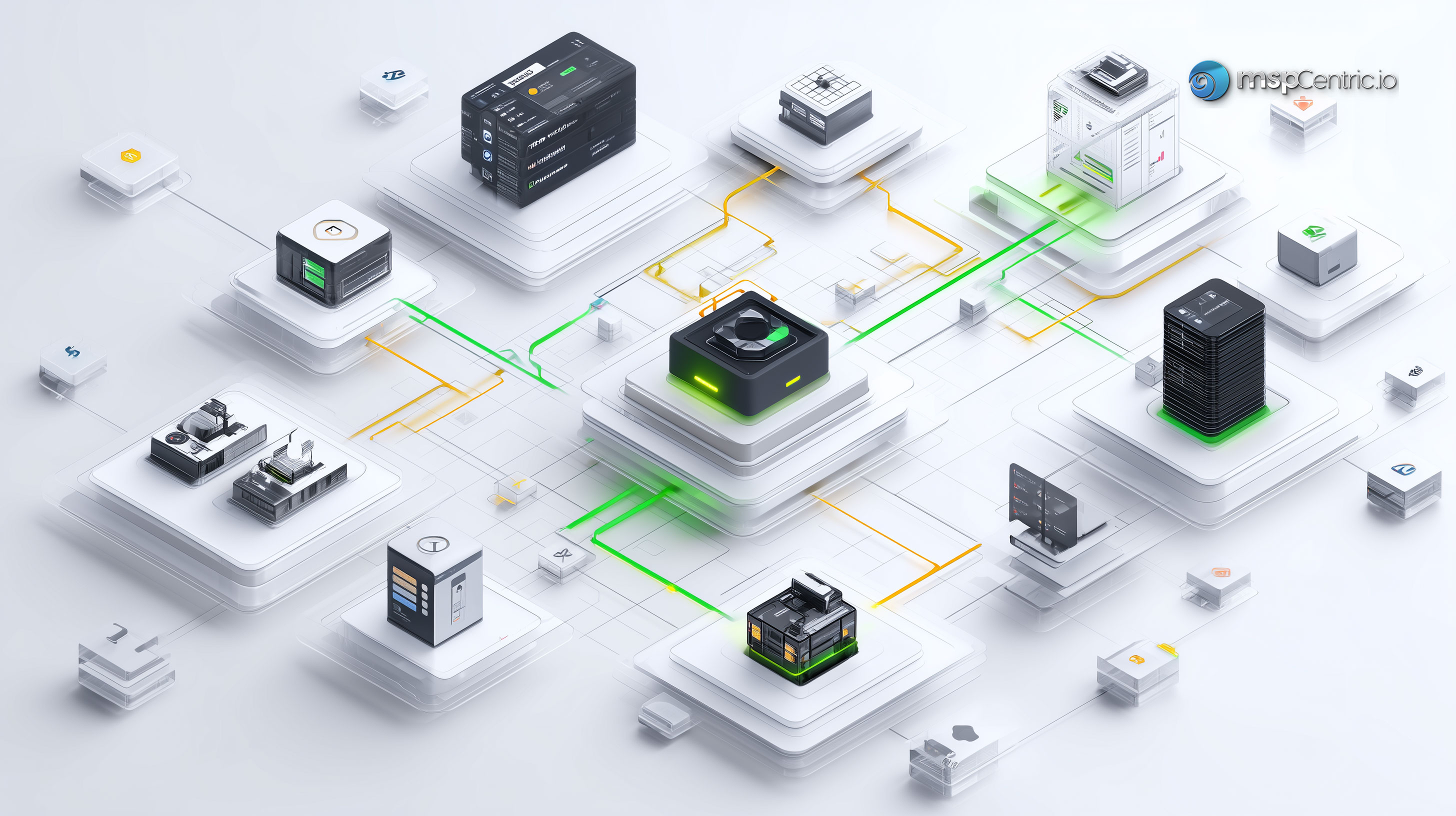
At the heart of scalable multi-PSA strategy is a canonical integration layer.
This layer:
- Defines your internal objects (tickets, assets, alerts, usage)
- Normalizes data before it reaches any PSA
- Acts as the source of truth for behavior
Each PSA integration becomes:
- A translation layer
- Not a full re-implementation
Why This Matters
Without a canonical layer:
- Every PSA becomes a special case
- Fixes must be repeated
- Features ship unevenly
With one:
- Business logic lives in one place
- PSA adapters stay thinner
- Maintenance becomes predictable
This is the difference between supporting multiple PSAs and being owned by them.
Where Vendors Go Wrong with “Parity”
A common fear is feature parity.
Vendors worry:
“If one PSA can’t support this workflow exactly, do we hold everything back?”
The answer is no — but parity needs to be defined correctly.
Parity does not mean:
- Identical UI
- Identical configuration options
- Identical edge cases
Parity means:
- The outcome is consistent
- MSP expectations are set clearly
- Differences are intentional, not accidental
Documenting known differences builds trust.
Hiding them erodes it.
Prioritizing PSAs Without Alienating MSPs
Not all PSAs deserve equal treatment at all times.
Mature vendors tier PSAs strategically:
- Tier 1: Core platforms with deep adoption
- Tier 2: Growing platforms with rising demand
- Tier 3: Opportunistic or limited-scope platforms
This affects:
- Depth of integration
- Speed of updates
- Support SLAs
- Documentation investment
The mistake is pretending all PSAs are equal — MSPs understand tradeoffs when they’re communicated clearly.
The Support Cost Reality of Multi-PSA Integrations
Every PSA you support adds:
- New edge cases
- New API behaviors
- New authentication quirks
- New failure modes
Support teams feel this first.
Scalable vendors proactively:
- Build PSA-aware diagnostics
- Log errors with PSA context
- Train support teams by workflow, not by platform
- Create PSA-specific troubleshooting guides
Without this, support tickets quietly pile up — and engineering becomes the bottleneck.
Release Management Across Multiple PSAs
One of the most overlooked challenges is release coordination.
PSAs update APIs.
Fields change.
Endpoints deprecate.
Vendors that scale well:
- Track PSA API versions explicitly
- Test integrations per PSA before release
- Stagger rollouts when needed
- Communicate changes clearly to partners
The goal is predictability — not speed at all costs.
How Sales and Marketing Fit Into Multi-PSA Strategy
Multi-PSA support isn’t just technical.
Sales teams need:
- Clear positioning by PSA
- Honest answers to “How deep is the integration?”
- Confidence in demo behavior
Marketing needs:
- PSA-specific landing pages
- Marketplace-ready messaging
- Clear use cases per platform
When this alignment is missing, integration becomes a liability instead of a differentiator.
When NOT to Add Another PSA
Sometimes the smartest move is saying “not yet.”
Red flags include:
- No clear workflow demand
- High engineering effort for low adoption
- PSA instability or unclear roadmap
- Lack of internal support readiness
Every PSA you add is a long-term commitment — not a checkbox.
Strategic restraint protects velocity.
The Long-Term Payoff
When multi-PSA strategy is done right:
- Engineering velocity increases
- Support becomes predictable
- Sales confidence improves
- MSP trust deepens
- Ecosystem reach expands
The vendor stops reacting to PSA requests — and starts leading with intent.
Conclusion
Supporting multiple PSAs isn’t about building more integrations.
It’s about building the right abstraction, aligning teams around workflows, and choosing where depth actually matters.
Vendors that treat PSA integrations as products — not projects — are the ones that scale cleanly.
Planning to expand your PSA coverage — or already feeling the complexity?👉 Book a call and let’s map a scalable multi-PSA strategy.
Subscribe to our newsletter today
Stay tuned for all things MSPCentric and PSA integrations.