How to Scope a PSA Integration Before You Write a Single Line of Code
Most PSA integration problems are scoping problems in disguise. Here is how to scope one correctly before engineering begins.

Most PSA integration problems that surface in production, the edge cases that break under real MSP configurations, the sync behaviors that do not match what MSPs expected, the performance issues that only appear at scale, are not engineering problems in the traditional sense. They are scoping problems in disguise.
The decision about what the integration should do, how it should behave under edge cases, what data it should sync and in what direction, and what MSP environments it needs to handle, is almost always made too quickly, too early, and with too little input from the people who will actually use it. By the time the problems surface in production, re-scoping requires re-engineering, and the cost of fixing a scoping decision made in week one is multiplied many times over by the work that was built on top of it.
Getting PSA integration scoping right before engineering begins is one of the highest-leverage investments a vendor can make. It is also one of the most consistently underinvested steps in the integration development process.
What Does Good PSA Integration Scoping Actually Cover?
The first dimension is data scope. What data objects need to move between systems, in which direction, and at what frequency? This sounds straightforward until you get into the specifics: which agreement fields in ConnectWise map to which fields in your system? What happens when a field exists in one system but not the other? What does the sync behavior need to be when a record is modified in both systems between sync intervals? These questions have answers that are not obvious and that different MSPs will expect differently based on their workflows.
The second dimension is MSP configuration variance. PSAs are not standardized environments. MSPs configure them in ways that reflect their specific operational history, client mix, and service delivery model. An integration scoped against a single "standard" ConnectWise configuration will encounter unexpected behavior in the first ten production deployments. Good scoping maps the range of MSP configurations the integration needs to handle, identifies which variance is in scope and which is explicitly out of scope, and documents the expected behavior for each.
The third dimension is failure behavior. What should the integration do when a sync fails? When a record cannot be matched? When an API rate limit is hit? When the PSA is in maintenance mode? These are not edge cases in the statistical sense. They are events that will happen regularly in production, and how the integration handles them determines whether support tickets are generated or not. Scoping the failure behavior explicitly, before engineering begins, prevents a large category of post-launch support burden.
The fourth dimension is MSP-facing visibility. What does the MSP see about the integration's behavior? What logging exists? What errors are surfaced and how? What does a successful sync look like from the MSP's perspective versus a partial sync versus a failed sync? MSPs cannot effectively troubleshoot an integration they cannot observe, and vendors cannot effectively support MSPs who have no visibility into what the integration is doing.
How Should the Scoping Process Work?
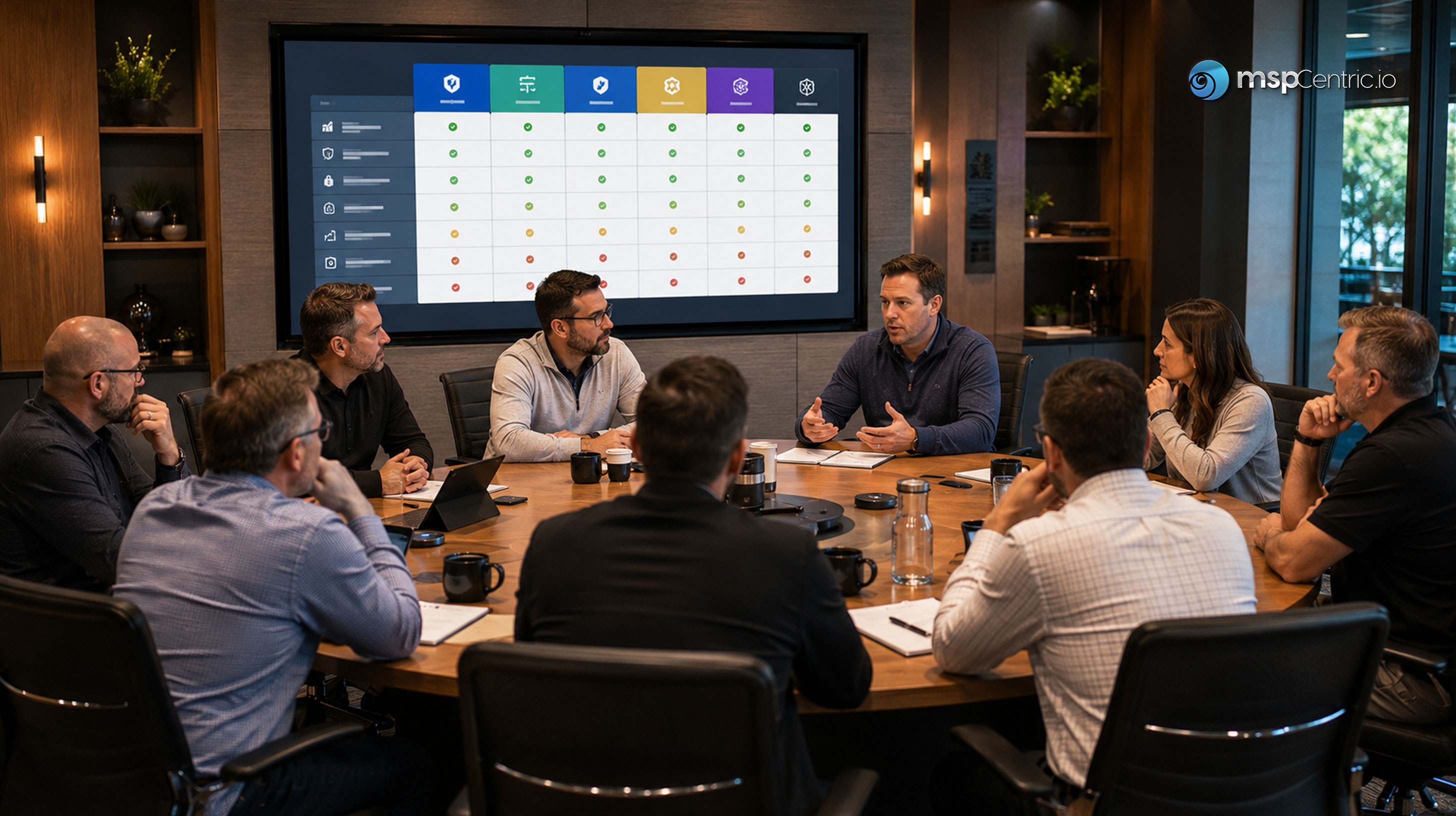
Start with MSP interviews before any technical documentation is produced. The most valuable scoping input comes from MSPs who run the target PSA in production environments that resemble the ones the integration will live in. Five to ten structured conversations with MSPs about their actual workflows, the specific data they need synchronized, and the failure scenarios that would most affect their operations produce scoping input that no amount of API documentation review can replicate.
Then produce a scoping document that is readable by both engineers and MSPs. The technical implementation details belong in engineering documentation. The scoping document should describe behavior in operational terms: "When a new client is created in ConnectWise, the integration will create a corresponding record in [product] within [timeframe]. If the creation fails, the MSP will see [specific error] in [specific location] and the sync will retry [specific number] of times before alerting."
Finally, review the scoping document with at least two MSPs before engineering begins. The gaps that appear in that review are significantly cheaper to address at the scoping stage than at any point after.
FAQ
Why is scoping the most important phase of PSA integration development?
Because most production integration problems are scoping problems in disguise. Decisions about data scope, MSP configuration variance, failure behavior, and MSP-facing visibility made too quickly or with too little input produce problems that are expensive to fix once engineering has built on top of them.
What are the four dimensions that good PSA integration scoping covers?
Data scope (what moves, in which direction, at what frequency), MSP configuration variance (the range of PSA environments the integration must handle), failure behavior (how the integration responds to sync failures and edge conditions), and MSP-facing visibility (what MSPs can observe about the integration's behavior and health).
How should vendors gather scoping input before engineering begins?
Through structured interviews with MSPs who run the target PSA in production, producing a scoping document readable by both engineers and MSPs, and reviewing that document with at least two MSPs before engineering begins. The gaps that surface in that review are significantly cheaper to address at scoping than after engineering has proceeded.
Subscribe to our newsletter today
Stay tuned for all things MSPCentric and PSA integrations.