How to Price Your PSA Integration (Without Leaving Money on the Table or Killing Adoption)
Most channel vendors treat PSA integration as a feature bundled into their existing pricing. The vendors who have figured out integration monetizatio
There is a pricing decision that almost every channel vendor makes too quickly and revisits too late. It happens when the PSA integration is ready to ship — or when a prospect asks directly: "Is the integration included, or is that extra?"
The answer most vendors give is the answer they gave the first time someone asked, based on whatever felt reasonable in that moment. It rarely reflects a deliberate pricing strategy. And it almost always affects adoption, retention, and revenue in ways that aren't immediately visible.
PSA integration pricing is not a billing question. It's a positioning question. The way a vendor prices access to its integration signals what they believe the integration is worth — to the MSP, to the relationship, and to the product itself. Getting it wrong in either direction has compounding consequences.
Why Do Most Vendors Get Integration Pricing Wrong?
Because they're solving the wrong problem. The instinct is to ask "what should we charge for the integration?" when the right question is "what role does the integration play in our commercial motion?"
If the integration is the primary reason MSPs buy — if it's the thing that unlocks the workflow, syncs the data, and makes the product feel like it belongs in the stack — then pricing it separately creates friction at exactly the moment when the MSP is deciding whether to adopt. That friction costs more in lost trials and slow onboarding than the incremental revenue from integration charges would ever generate.
If the integration is one of several access options, and the vendor also serves customers who don't use a PSA, then tiering makes more sense. The integration adds value for a specific segment, and pricing it as an upgrade captures that value without penalizing the buyers who don't need it.
The mistake isn't charging or not charging. It's not asking the question in the right frame.
What Are the Main Integration Pricing Models in the Channel?
The most common approaches fall into three categories.
The first is bundled inclusion — the integration is included in the standard product price with no separate charge. This is the right model when the integration is central to the product's value proposition and when adoption friction is a bigger risk than revenue capture. Vendors who use this model are betting that the integration accelerates time-to-value enough that it pays for itself through improved retention and expansion. The evidence generally supports this bet for products where the PSA sync is the primary daily touchpoint.
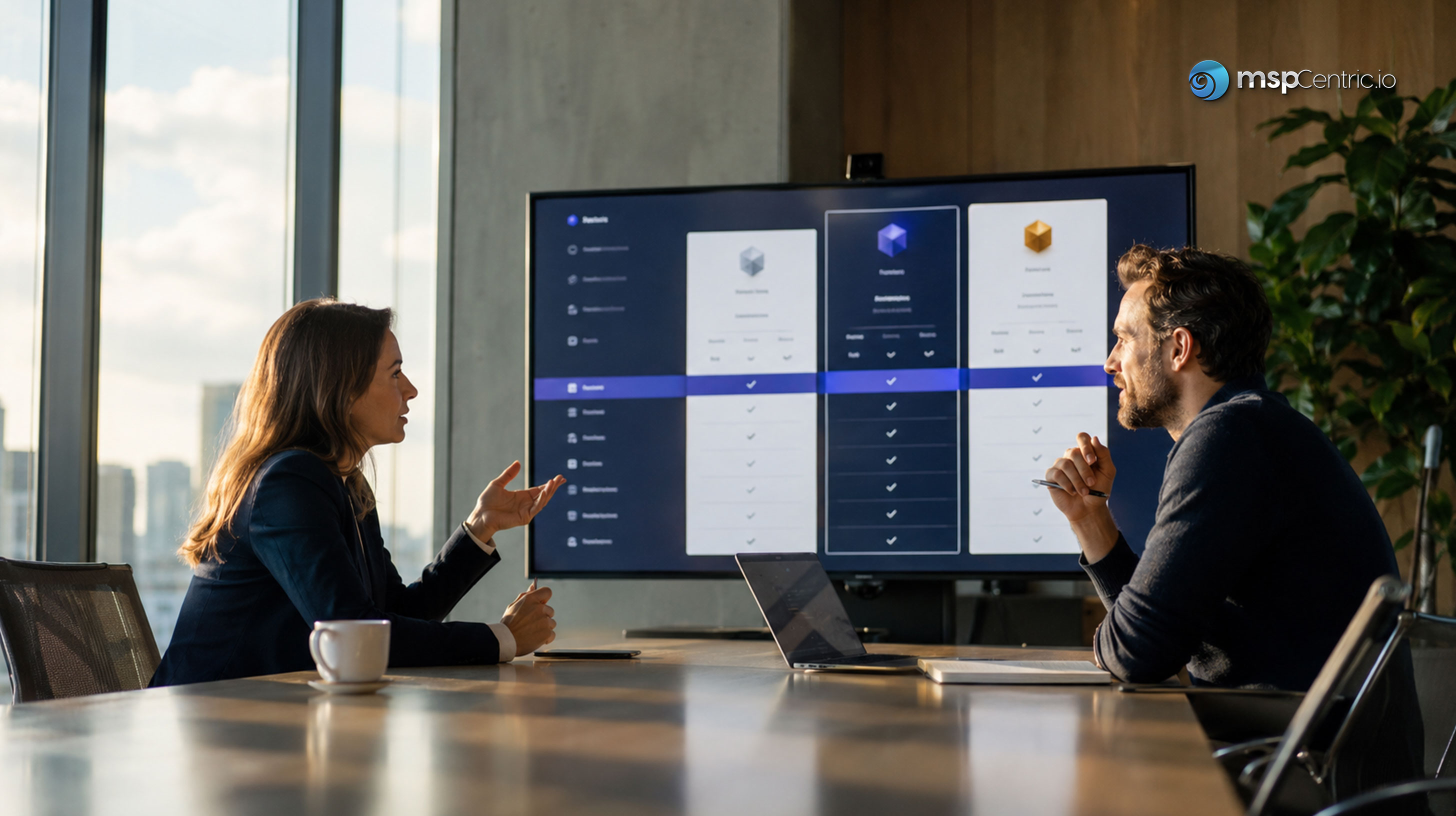
The second is tiered access — the integration is available on higher tiers but not the base plan. This works well when the vendor serves a mixed market: some customers who need deep PSA connectivity, and others who don't. The integration becomes a natural upgrade driver for the segment that values it most, and the base tier stays accessible to a broader audience. The risk is that the MSP segment, which almost universally wants the integration, becomes trapped on the wrong tier and churns before upgrading.
The third is add-on pricing — the integration is available for a separate per-month charge regardless of tier. This model captures the most revenue from integration-forward customers but creates the most friction. It also requires the vendor to continuously justify the separate charge as the integration matures and competitors bundle equivalents.
What Should Actually Drive the Pricing Decision?
Four factors, weighted in this order.
First: what percentage of your MSP customers actually use the integration once they have access to it? High usage rates mean bundled inclusion is likely correct. Low usage rates suggest the integration is not as central as assumed, and tiering may be more appropriate.
Second: what is the primary reason MSPs churn? If integration gaps or friction appear consistently in churn conversations, pricing the integration separately is adding to a problem that's already costing retention revenue.
Third: what are the direct competitors doing, and what signal does it send to the market? In categories where integration is becoming table stakes, charging separately is an increasingly visible market positioning signal — one that MSPs notice and discuss in peer communities.
Fourth: what does the sales data say about deal velocity by tier? If most deals are closing on the tier that includes the integration, bundling it into a lower tier may accelerate conversions without meaningfully affecting revenue.
FAQ
Should PSA integration be included in the base price or charged separately?
It depends on the role the integration plays in your commercial motion. If the integration is the primary value driver and the main reason MSPs adopt, inclusion typically outperforms separation. If the integration serves a distinct segment of your customer base, tiering or add-on pricing may capture more value.
What happens when vendors charge separately for PSA integrations that competitors bundle?
They create a visible price disadvantage in peer communities and sales comparisons. MSPs talk, and "competitor X includes the integration at no extra charge" is a straightforward objection that's difficult to overcome with feature differentiation alone.
How do you know if your integration pricing is hurting adoption?
Look at the ratio of trials that activate the integration versus trials that don't, time-to-first-value metrics, and integration usage rates among customers who churn in the first 90 days. If integration friction shows up consistently in these signals, the pricing structure may be contributing.
Subscribe to our newsletter today
Stay tuned for all things MSPCentric and PSA integrations.