How MSP Peer Groups and Buying Cooperatives Are Changing What PSA Integrations Need to Do
MSP peer groups and buying cooperatives are concentrating purchasing power and raising integration standards. Here is what vendors need to know.
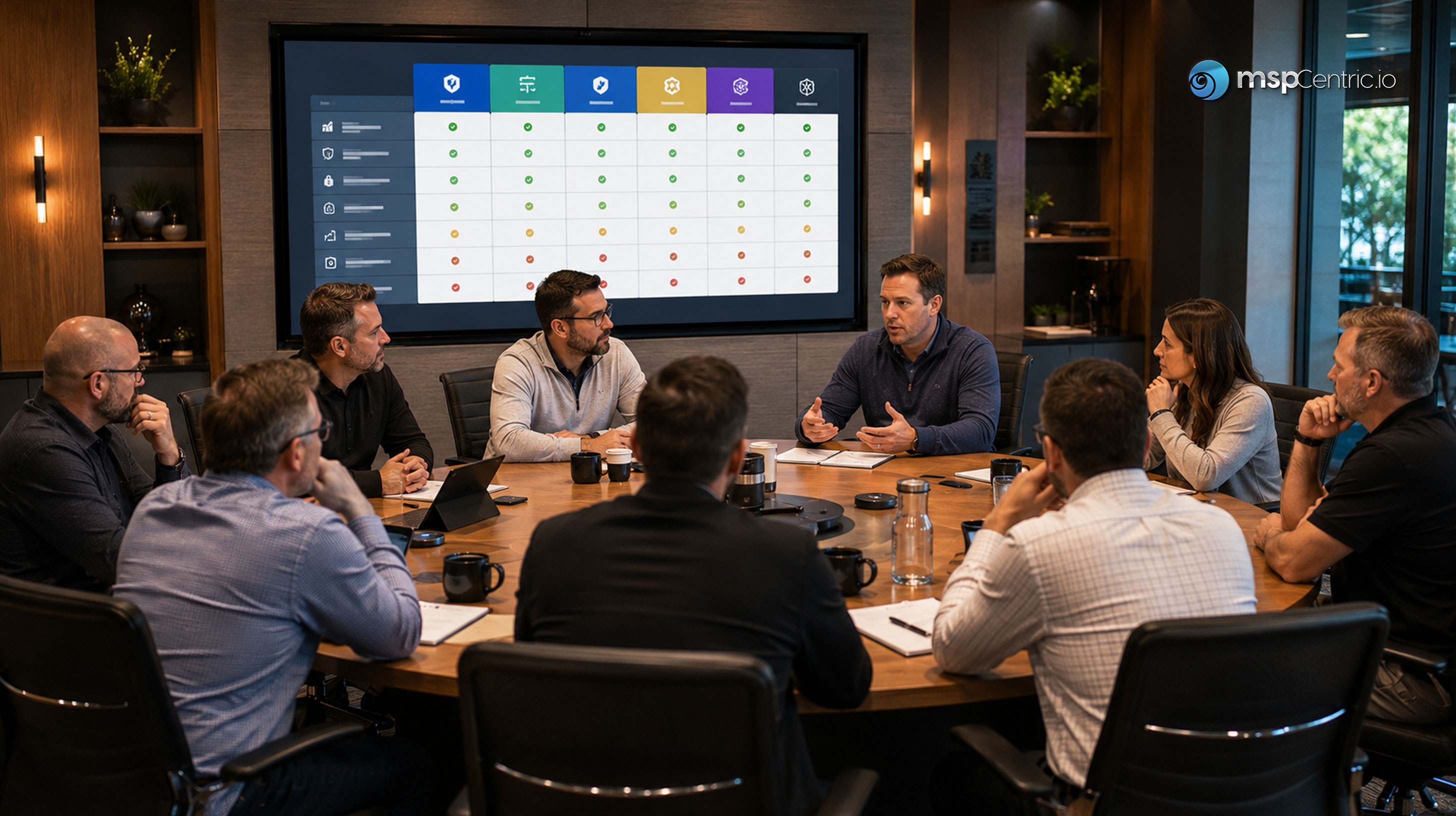
The MSP channel has always been community-driven. But the nature of that community influence on vendor decisions is changing in a way that most channel vendors have not fully accounted for in their integration strategy.
MSP peer groups, buying cooperatives, and vendor selection committees have been consolidating purchasing influence for years. Organizations like HTG, ASCII, Evolved, and a growing number of informal peer networks create environments where a single influential MSP's integration experience — positive or negative — reaches dozens or hundreds of their peers within weeks. A vendor endorsed by a respected peer group member sees adoption accelerate through the network in a way that no direct sales effort can replicate. A vendor criticized in the same environment sees exactly the opposite.
What is changing now is that these groups are becoming more formalized in their vendor evaluation processes. Peer groups that previously shared informal opinions are increasingly producing structured vendor scorecards. Buying cooperatives that previously aggregated purchasing volume are increasingly setting integration standards that vendors must meet to access their member network. The bar for what constitutes an acceptable PSA integration is being set not just by individual MSPs evaluating a vendor, but by groups of MSPs establishing shared expectations.
What Are Peer Groups and Buying Cooperatives Looking For?
Three things have emerged consistently as the evaluation criteria that peer-group-influenced vendor decisions center on.
The first is integration reliability over time. Peer groups share support experiences as readily as they share product experiences. A vendor whose integration has a history of breaking when PSA platforms update, or whose support response degrades under volume, will have that reputation circulate through peer networks in detail. Reliability is not just about uptime. It is about the consistency of the integration's behavior over time and across different MSP configurations.
The second is PSA coverage alignment with the group's composition. Most peer groups and cooperatives have a dominant PSA or two within their membership. A vendor seeking access to a primarily ConnectWise-heavy peer group with a shallow ConnectWise integration, or no integration at all, will face a structural barrier regardless of how strong the product itself is. Peer groups increasingly make PSA coverage a prerequisite for formal endorsement or cooperative membership.
The third is the vendor's track record of listening to the channel. MSPs in peer communities have long memories for vendors who committed to improvements that did not materialize, who shifted pricing without warning, or who treated the channel as a distribution channel rather than a partner network. Peer groups surface this history explicitly. The vendors who have consistently treated MSP partners as genuine partners, communicated transparently about changes, and followed through on commitments are the ones that peer group endorsements reach.
What Does This Mean for Integration Strategy?
It means that the most efficient customer acquisition channel in the MSP market is increasingly gated by integration quality and partner relationship quality in ways that were previously less formalized.
A vendor who invests in building a deep, reliable integration with the PSA platforms that their target peer group uses, and who maintains the kind of transparent partner relationships that generate genuine endorsement, is positioned to access a concentrated, pre-warmed audience through peer network effects. A vendor who underinvests in integration or treats partner relationships transactionally will find that peer groups become barriers rather than accelerants.
The practical implication is that integration investment decisions should account for the PSA composition of the peer groups the vendor is targeting, not just the broad market distribution of PSA usage.
FAQ
How are MSP peer groups and buying cooperatives changing vendor evaluation?
By formalizing what were previously informal influence processes. Peer groups are increasingly producing structured vendor scorecards and buying cooperatives are setting integration standards that vendors must meet to access their member networks. Integration quality and partner relationship quality are now gated requirements, not soft factors.
What do peer groups and cooperatives prioritize in PSA integration evaluation?
Integration reliability over time, PSA coverage aligned with the group's composition, and the vendor's track record of transparent communication and follow-through with MSP partners. All three factors are evaluated through shared peer experience rather than vendor-provided materials.
How should vendors adjust their integration strategy to account for peer group influence?
By mapping the PSA composition of their target peer groups and ensuring their integration depth aligns with those platforms, and by building the kind of partner relationship track record that generates genuine peer endorsement rather than neutral or negative word-of-mouth.
Subscribe to our newsletter today
Stay tuned for all things MSPCentric and PSA integrations.